
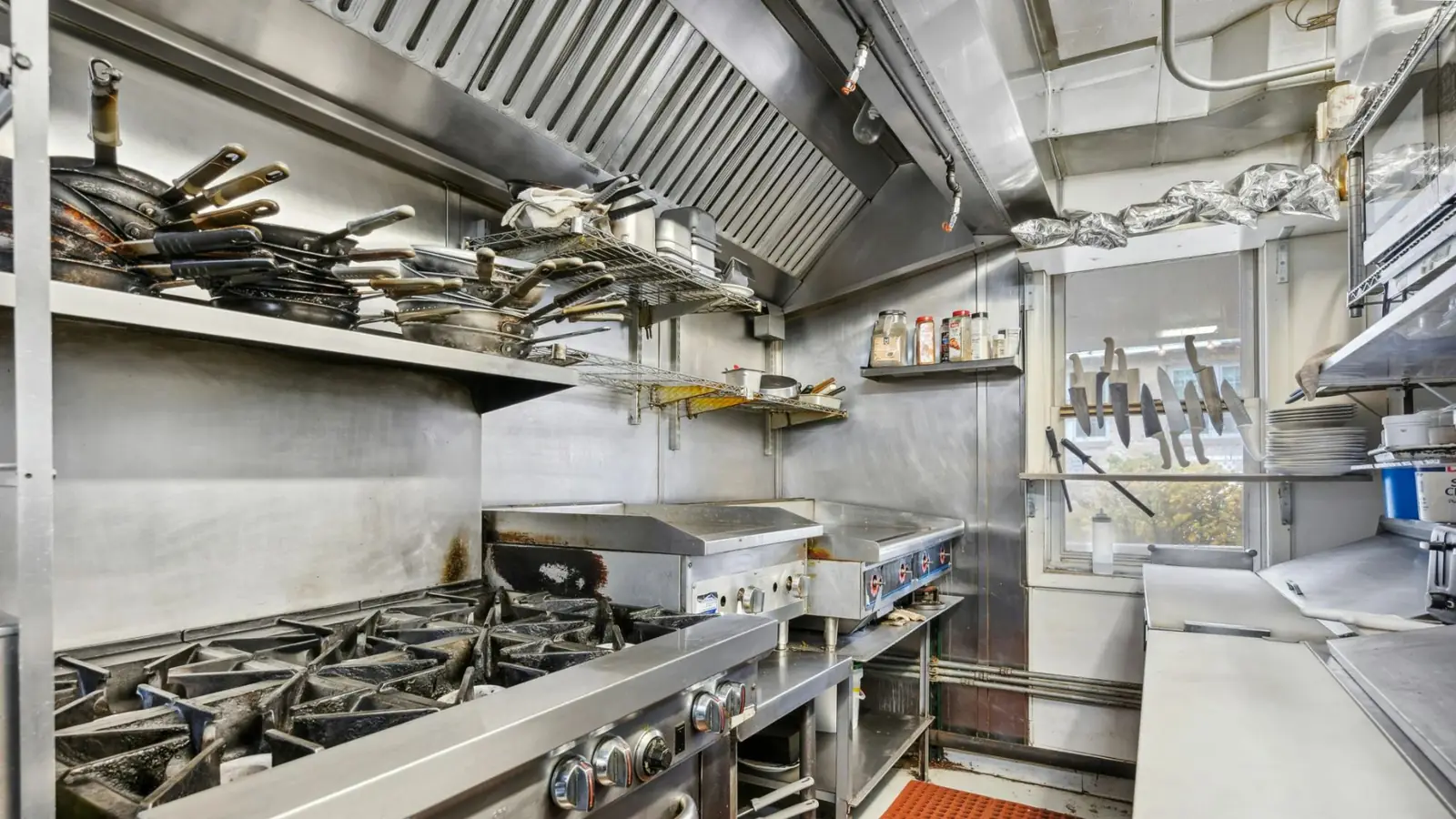
Serving alcohol? AGCO asks for a compliance letter from your local fire department with a liquor sales licence application, and the building or fire letter should state the occupant load for the licensed area.
A restaurant in Ontario passes its fire inspection when the kitchen, the dining room, and the exits meet the Ontario Fire Code. The inspector looks for a Class K extinguisher at the cooking line, a current service report on the hood suppression system, lit exit signs, working emergency lights, and a posted occupant load if more than 60 people can be inside. If you plan to serve alcohol, the inspection counts twice: the Alcohol and Gaming Commission of Ontario (AGCO) asks for a compliance letter from your fire department before it licenses the room.
Picture the last week before opening. The contractor is loading the trailer, the menus are back from the printer, and the coolers are stocked. The fire inspector's visit sits on the calendar between the health inspection and the staff tasting. Each item on the list below is easier to fix before that visit than after it.
When does a new restaurant meet a fire inspector?
Most new restaurants see a fire inspector for one of three reasons:
- A liquor licence application. The AGCO asks for letters from the fire department, the building department, and public health. The fire department's letter has to show that your premises meet current standards.
- Municipal licensing. Some municipalities include a fire review in their business licence process. Ask your town or city what its process requires.
- A routine or complaint inspection. Under the Fire Protection and Prevention Act, a fire inspector can enter and inspect commercial premises at any reasonable time, without a warrant.
Whatever brings the inspector in, the standard is the same: the Ontario Fire Code, O. Reg. 213/07. Start at the cooking line and work out to the front door.
The kitchen: what the inspector checks first
The Class K extinguisher
The Fire Code requires extinguishers suitable for Class K fires to protect cooking operations. Class K covers burning cooking oils and fats, the fire a deep fryer or a flat-top produces. Wet chemical units are the usual choice, and the label tells you whether the unit you own carries a Class K rating.
If you bought an existing restaurant, check the older units with care. A wet or dry chemical extinguisher that isn't listed for Class K, but that met the Code on December 31, 2014, may stay in place only until it comes due for its internal examination or hydrostatic test, needs recharging after use, or gets damaged. From that point, its replacement has to be suitable for Class K fires. Our guide to the types of fire extinguishers explains how to read the rating on the label.
The hood suppression system
The inspector will ask when the kitchen hood suppression system was last serviced and will want to see the service report. If you took over a space with an existing system, don't assume the previous tenant kept it current. Book a service visit before opening, so the report carries your restaurant's name and a recent date.
Hood cleaning and suppression service are two different jobs. Our post on commercial kitchen fire suppression systems covers the service schedule and the difference in detail.
The other extinguishers
The dining room, the bar, the storage room, and the office still need protection against ordinary fires. The Fire Code requires the extinguishers that protect a building to be suitable for Class A fires, and an ABC dry chemical unit is the usual choice. The inspector checks three things on every unit:
- Visible and accessible. Extinguishers have to be easy to see and reachable at all times. A unit behind a stack of high chairs fails the check.
- Mounted at the right height. The top of a unit weighing 18 kg or less can sit no higher than 1.5 m above the floor.
- Tagged. Each extinguisher needs a tag showing the maintenance date, the servicing company, and the signature of the person who did the work.
The dining room and the exits
Exit signs and emergency lights
Exit signs must be clearly visible, clean, and legible, and lit whenever the restaurant is occupied. Battery emergency lights get inspected and tested every month, and they run for their full design duration under a simulated power failure at least once a year. A new restaurant should have its first monthly test logged before the inspector arrives. Our guide to emergency lighting inspection walks through both tests.
The posted occupant load
When the occupant load is more than 60 persons, the Fire Code requires it to be posted in a conspicuous location. Post it near the main entrance, where staff and inspectors will see it. For a licensed restaurant, the AGCO says the compliance letter from the building or fire department should state the occupant load for the licensed area.
Clear exit routes
Restaurants fill up fast with deliveries, extra chairs, and stacked high chairs, and the exit corridor is the easiest place to park them. The inspector walks every route from the kitchen and the dining room to the outside. Keep the routes and the exit doors clear before opening night, and keep them that way after.
Does a restaurant need a fire safety plan?
Section 2.8 of the Fire Code requires an approved fire safety plan in any building that contains an assembly occupancy. The Building Code classes most sit-down restaurants as assembly occupancies, so most restaurants with seating need one. The plan sets out what staff do when the alarm sounds, who is in charge, how the fire department is called, and how the building's fire systems work. It has to be approved by the fire department, kept in an approved location, and reviewed at least every 12 months.
A restaurant inside a plaza or a mixed-use building may be covered by the building owner's plan. Ask your landlord before you write a new one. Our guide to fire safety plans in Ontario covers who needs one and what goes in it, and Boss Fire writes and submits plans for buildings that need their own.
The liquor licence step
The AGCO publishes its municipal approval requirements for a liquor sales licence. Your application needs compliance letters from three local agencies:
- The fire department (the Fire Protection Officer or Fire Marshal), under the Fire Protection and Prevention Act, 1997
- The building department, under the Building Code Act, 1992
- Public health, under the Health Protection and Promotion Act
Each letter has to show that the establishment meets the current standards that agency enforces. The letter from either the building or the fire department should state an occupant load for the licensed area. If you're licensing a patio, the letters have to say that the outdoor area was inspected.
Plan the fire inspection with the licence in mind. If the inspector finds a deficiency, the letter waits until you fix it. Booking your extinguisher, hood suppression, and emergency lighting service a few weeks before the inspection gives you time to correct anything the technician finds.
Your pre-inspection checklist
Work through this list before you call the fire department:
- A Class K extinguisher protects the cooking line, and older chemical units have been checked against the 2014 rule.
- The hood suppression system has a recent service report in your restaurant's name.
- Every other area has a Class A extinguisher that is visible, accessible, mounted at the right height, and tagged.
- Every exit sign is lit, clean, and legible.
- The emergency lights have passed their monthly test, and the test is logged.
- The occupant load is posted in a conspicuous location, if the load is more than 60 persons.
- Exit routes and exit doors are clear.
- The fire safety plan is approved and in its approved location, or you've confirmed that the building's plan covers you.
- Any fire alarm in the building has a current annual inspection report.
For the systems a restaurant shares with the rest of the building, work through our Ontario fire inspection checklist.
The paperwork to keep on site
The inspector checks the equipment, and then asks to see the records. Keep these in one folder near the manager's office:
- The hood suppression service report
- The extinguisher service records, which the Fire Code requires for each unit
- The emergency lighting test log
- The fire alarm inspection report, if the building has a fire alarm system
- The approved fire safety plan, where one is required
- Copies of the AGCO compliance letters
The Fire Code requires records to stay at the building for at least two years, along with the two most recent records of each test or inspection. Your insurer may ask for the same set; our guide to the fire safety documents your insurer asks for covers what to keep.
Get your restaurant inspection-ready with Boss Fire
Boss Fire services the systems a fire inspector checks in a restaurant: kitchen hood suppression, Class K and ABC extinguishers, emergency lighting and exit signs, fire alarms, and fire safety plans. Annual extinguisher inspection starts at $40 per extinguisher, per year, plus one service call fee per visit. If we inspect your extinguishers and your emergency lighting in the same visit, you pay one service call fee for both.
We serve restaurants across the GTA and the surrounding region, from Niagara to Oshawa and north to Barrie. Our technicians are NFPA-certified, and Boss Fire carries $5 million in liability insurance. Send us your opening date and your equipment list, and we'll answer with an itemized quote the same business day. In the GTA, we can be on site within 48 hours.
Book My Pre-Opening Inspection
Sources and references
- Ontario Fire Code, O. Reg. 213/07, Division B, Articles 1.1.2.2 (records), 2.7.1.5 (posting occupant load), 2.7.3.1 and 2.7.3.2 (exit signs), 2.8.1.1 and 2.8.2.1 (fire safety plans), 6.2.1.3 (extinguisher location), 6.2.4.3 (mounting height), 6.2.6.2 (Class A protection), 6.2.6.12 (Class K), 6.2.7.4 and 6.2.7.5 (tags and records), and 6.7.1.6 (emergency lighting tests)
- Fire Protection and Prevention Act, 1997, section 19 (inspections)
- AGCO: Municipal approval requirements for a liquor sales licence
Frequently Asked Questions
What does a fire inspector check in a new restaurant? +
The inspector checks the kitchen, the dining room, and the exits against the Ontario Fire Code. Expect questions about the Class K extinguisher at the cooking line, the hood suppression system's service report, the general extinguishers, the exit signs and emergency lights, the posted occupant load, and the fire safety plan if your building needs one.
Do I need a fire inspection to get a liquor licence in Ontario? +
Yes, in practice. The AGCO asks liquor sales licence applicants for compliance letters from the local fire department, the building department, and public health. The fire department writes its letter after it confirms the premises meet current standards, and a patio letter has to say the outdoor area was inspected.
What fire extinguisher does a restaurant kitchen need in Ontario? +
The Ontario Fire Code requires extinguishers suitable for Class K fires to protect cooking operations. The rest of the restaurant still needs Class A coverage, which an ABC dry chemical unit provides. Older wet or dry chemical units that met the Code on December 31, 2014 can stay only until they come due for an internal examination or hydrostatic test, need recharging after use, or get damaged.
Does my restaurant need a fire safety plan? +
Section 2.8 of the Ontario Fire Code requires an approved fire safety plan in any building that contains an assembly occupancy, and the Building Code classes most sit-down restaurants as assembly occupancies. A take-out counter with no seating may fall under a different classification, so confirm with your fire department.
When does a restaurant have to post its occupant load? +
When the occupant load is more than 60 persons, the Ontario Fire Code requires it to be posted in a conspicuous location. Post it near the main entrance, where staff and inspectors will see it.
Need a Fire Safety Assessment?
Our certified technicians handle the full inspection cycle. Same-day service available across the GTA.