
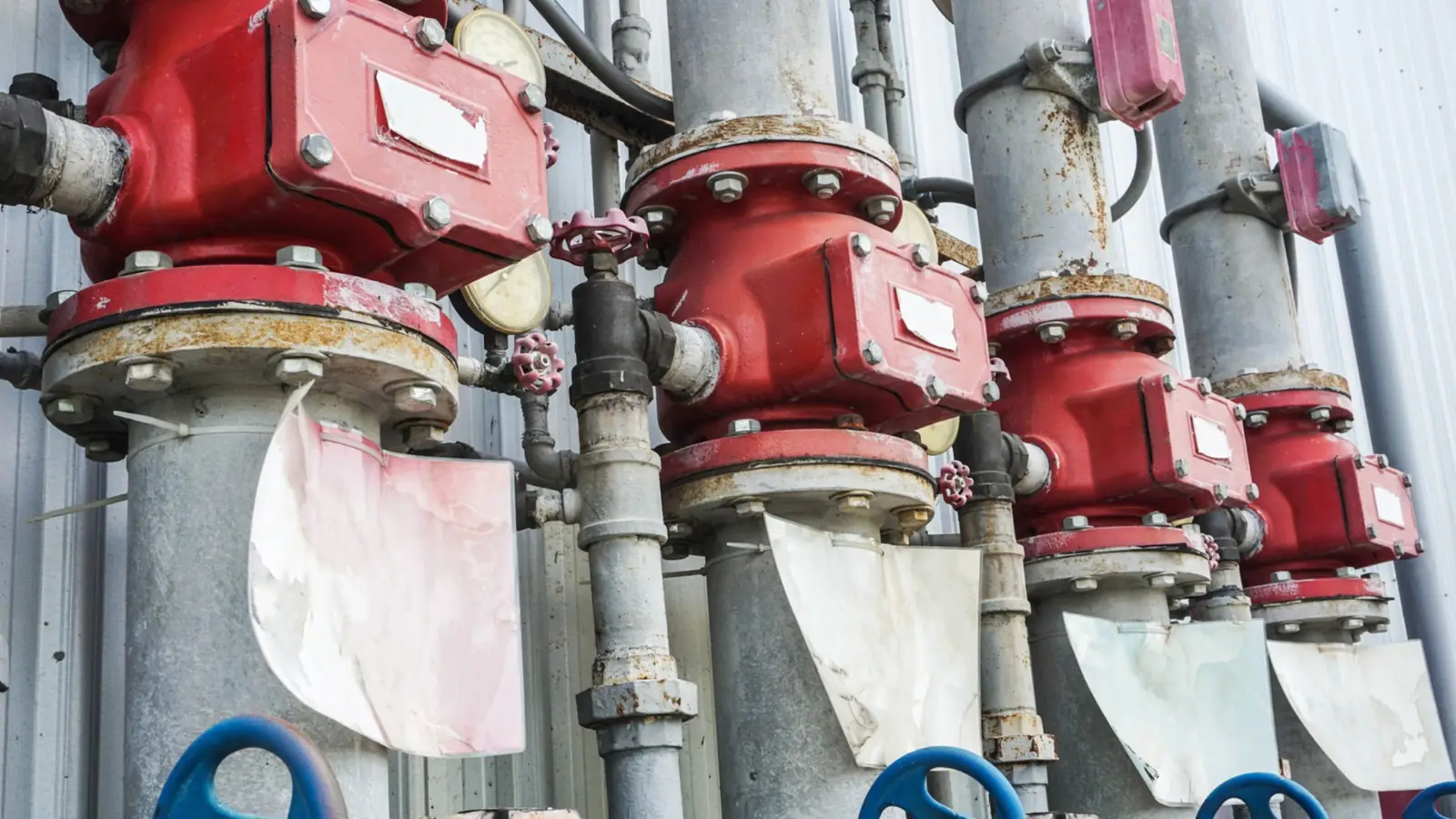
The Ontario Fire Code says wet pipe sprinkler systems must not be exposed to temperatures below 4°C at the sprinklers unless the system has first been altered to prevent freezing.
Winterizing a commercial sprinkler system means keeping every water-filled pipe at 4°C or warmer and keeping dry pipe systems dry. The Ontario Fire Code sets the rules: wet pipe systems can't be exposed to temperatures below 4°C at the sprinklers, dry pipe valve rooms in unheated buildings get checked whenever it's below 0°C outside, and auxiliary drains get inspected to prevent freezing. A fall walk-through before the first hard frost catches most problems.
Frozen sprinkler pipes cause two kinds of damage. While the ice holds, the pipe can't deliver water, so that part of the building has no sprinkler protection. When the ice thaws, a split pipe or fitting can open up and flood the unit below, often on a weekend when nobody is watching.
What does the Ontario Fire Code require in winter?
The Fire Code's sprinkler rules sit in Section 6.5. Several of them deal with cold weather directly.
Wet pipe systems: the 4°C rule
A wet pipe system keeps water in the pipes at all times. Article 6.5.1.4 says changes in equipment or occupancy that could drop temperatures at the sprinklers below 4°C, or raise them above 38°C, can't be made until the system has been altered to prevent freezing or premature operation. In practice, if a tenant turns off the heat in a vacant unit, or a landlord converts a heated storage room into an open loading area, the sprinkler system has to be dealt with first.
Dry pipe systems
A dry pipe system holds air under pressure in the pipes, and water stays behind a valve in a heated room until a sprinkler opens. It protects spaces that can't be kept warm, such as unheated warehouses, parking garages, and loading docks. The Fire Code adds these winter duties:
- Valve room checks: dry pipe valve rooms or enclosures in unheated buildings are checked as often as necessary when the outside temperature falls below 0°C (Article 6.5.3.3).
- Auxiliary drains: auxiliary drains are inspected to prevent freezing (Article 6.5.4.1).
- Priming water: the priming water level above the dry pipe valve is inspected at least every three months (Article 6.5.4.3).
- Trip tests: dry pipe valves are trip tested every year, and with the control valve fully open at least once every three years (Article 6.5.5.4).
Alarm lines, gauges, and temperature sensors
After the monthly alarm test, an alarm line that could freeze has to be cleared of water (Article 6.5.5.2). Gauges are checked weekly to confirm the system holds its operating pressure (Article 6.5.3.2). Where a building has temperature supervisory devices connected to the fire alarm, those devices are tested at least every six months (Article 6.5.5.7). Those sensors warn you before the pipes freeze, as long as somebody responds to the signal.
The Fire Code also treats compliance with NFPA 25, the sprinkler inspection and maintenance standard, as meeting its own inspection, testing, and maintenance rules. Our post on the NFPA 25 sprinkler inspection schedule covers the full year.
Where do sprinkler pipes freeze first?
Sprinkler pipes freeze in the parts of a building that people don't watch in January. These spots come up again and again:
- Loading docks: overhead doors stand open for an hour while a truck unloads, and the branch line above the door sits in the cold air the whole time.
- Vacant units: a tenant moves out in November, the heat gets turned down to save money, and the pipe in the ceiling sits at the same temperature as the empty room.
- Exterior walls and soffits: branch lines that run through ceiling spaces along exterior walls, or out to canopies, lose heat faster than the room below.
- Stairwells and vestibules: doors propped open for deliveries or smokers pull cold air across pipes near the entrance.
- Riser and valve rooms: a valve room with an exterior wall, a broken unit heater, or a door left open can freeze the most important part of the system.
- Attic and roof spaces: sprinkler pipe above an insulated ceiling sits on the cold side of the insulation.
A fall checklist for property managers
Work through this list in October or early November, before the first hard frost:
- Walk every area with wet pipe sprinklers and confirm it holds 4°C or warmer, including vacant units and storage rooms.
- Check the heaters in valve rooms and riser rooms, and confirm the doors close and latch.
- Fix broken windows, missing ceiling tiles, and gaps around overhead doors near sprinkler pipe.
- Tell tenants and staff to keep loading dock and entrance doors closed between deliveries.
- Have your sprinkler contractor drain the auxiliary drains on dry pipe systems and check the priming water level.
- Test the low temperature supervisory devices and confirm their signals reach your fire alarm panel and your monitoring company.
- Check that heat tracing, where installed, works and covers the pipe it was installed for.
- Post the location of the sprinkler control valves and the after-hours phone numbers where your staff can see them.
A vacant unit deserves its own visit. Agree in writing with the outgoing tenant or the leasing team on who keeps the heat on.
Why do dry pipe systems still freeze?
A dry pipe system protects cold spaces because the pipes hold air, but water still finds its way in. Every time a contractor runs a trip test, water flows into the pipes. Warm, moist air in the system also condenses on cold pipe walls. That water runs to the low points of the system and freezes there.
Auxiliary drains exist to remove that water. Your contractor opens them in the fall and again after cold snaps, and the Fire Code names them in its winter rules. A plugged or forgotten drain leaves water sitting at the low point of a dry system, where an unheated warehouse will freeze it.
Some buildings use antifreeze systems for small cold areas instead of dry pipe. NFPA 25 calls for the antifreeze solution to be tested every year, so ask your contractor to include it in the fall visit.
What should you do if a sprinkler pipe freezes?
A frozen pipe is an impairment. That part of the building has no working protection until the pipe is repaired.
- Call a sprinkler contractor. Boss Fire offers 24/7 emergency dispatch on the main line, 905-519-BOSS.
- Don't use an open flame. Thawing a pipe with a torch can start a fire or damage the pipe and fittings.
- Watch for the thaw. If the pipe has split, water will flow when the ice melts. Keep someone near the area and know where the control valve is.
- Notify the right people. If the system has to be shut down for the repair, the Fire Code requires you to notify the fire department, the building's occupants, and supervisory staff (Article 6.5.2.4).
If a frozen pipe has already burst and a sprinkler is flowing, follow our guide on what to do when a fire sprinkler goes off.
Low temperature signals on your fire alarm panel
Many sprinkler systems have temperature supervisory devices wired to the fire alarm panel. When a room gets too cold, the panel shows a supervisory signal. A supervisory signal means part of the system needs attention, and a low temperature signal means somebody needs to check that room tonight. Our guide to fire alarm trouble and supervisory signals explains what each signal means and who to call.
Book a fall sprinkler check with Boss Fire
Boss Fire inspects and maintains commercial sprinkler systems across the GTA and the surrounding region, from Niagara to Oshawa and north to Barrie. Our NFPA-certified technicians check dry pipe valves, drain auxiliary drains, test supervisory devices, and give you a written report. Quotes are itemized and answered the same business day, and in the GTA we can be on site within 48 hours.
See our sprinkler inspection and repair page for the full service, and use the Ontario fire inspection checklist for the rest of your building.
Sources and references
- Ontario Fire Code, O. Reg. 213/07, Division B, Articles 6.5.1.1 (NFPA 25 compliance), 6.5.1.4 (temperatures at sprinklers), 6.5.2.4 (shutdown notification), 6.5.3.2 (gauge checks), 6.5.3.3 (protection against freezing), 6.5.4.1 (auxiliary drains), 6.5.4.3 (priming water), 6.5.5.2 (alarm testing), 6.5.5.4 (dry pipe valve trip tests), and 6.5.5.7 (supervisory device testing)
- NFPA 25, Standard for the Inspection, Testing, and Maintenance of Water-Based Fire Protection Systems
Frequently Asked Questions
At what temperature do sprinkler pipes freeze? +
Water freezes at 0°C, but the Ontario Fire Code sets a safety margin. Article 6.5.1.4 says a wet pipe system must not see temperatures below 4°C at the sprinklers unless the system has first been altered to prevent freezing. Treat any space that drops below 4°C as a freezing risk.
How do you winterize a commercial sprinkler system? +
Walk the building before the first hard frost. Confirm every space with wet pipe sprinklers stays at 4°C or warmer, close the doors and openings that let cold air in, have your contractor drain the auxiliary drains on dry pipe systems, check the dry pipe valve room heat, and make sure low temperature supervisory devices report to your panel.
Do dry pipe sprinkler systems freeze? +
They can. A dry pipe system holds air in the pipes, but condensation and leftover test water collect at low points and can freeze there. The Fire Code requires auxiliary drains to be inspected to prevent freezing, and the valve room in an unheated building has to be checked whenever it drops below 0°C outside.
What should I do if a sprinkler pipe freezes? +
Call a sprinkler contractor and do not try to thaw the pipe with an open flame. A frozen section leaves that area unprotected, and a pipe that has split can flood once the ice melts. If the system has to be shut down for the repair, the Fire Code requires you to notify the fire department, occupants, and supervisory staff.
How often should a dry pipe valve room be checked in winter? +
Article 6.5.3.3 of the Ontario Fire Code says dry pipe valve rooms or enclosures in unheated buildings must be checked as often as necessary when the outside temperature falls below 0°C. On cold nights that can mean a daily check.
Need a Fire Safety Assessment?
Our certified technicians handle the full inspection cycle. Same-day service available across the GTA.