
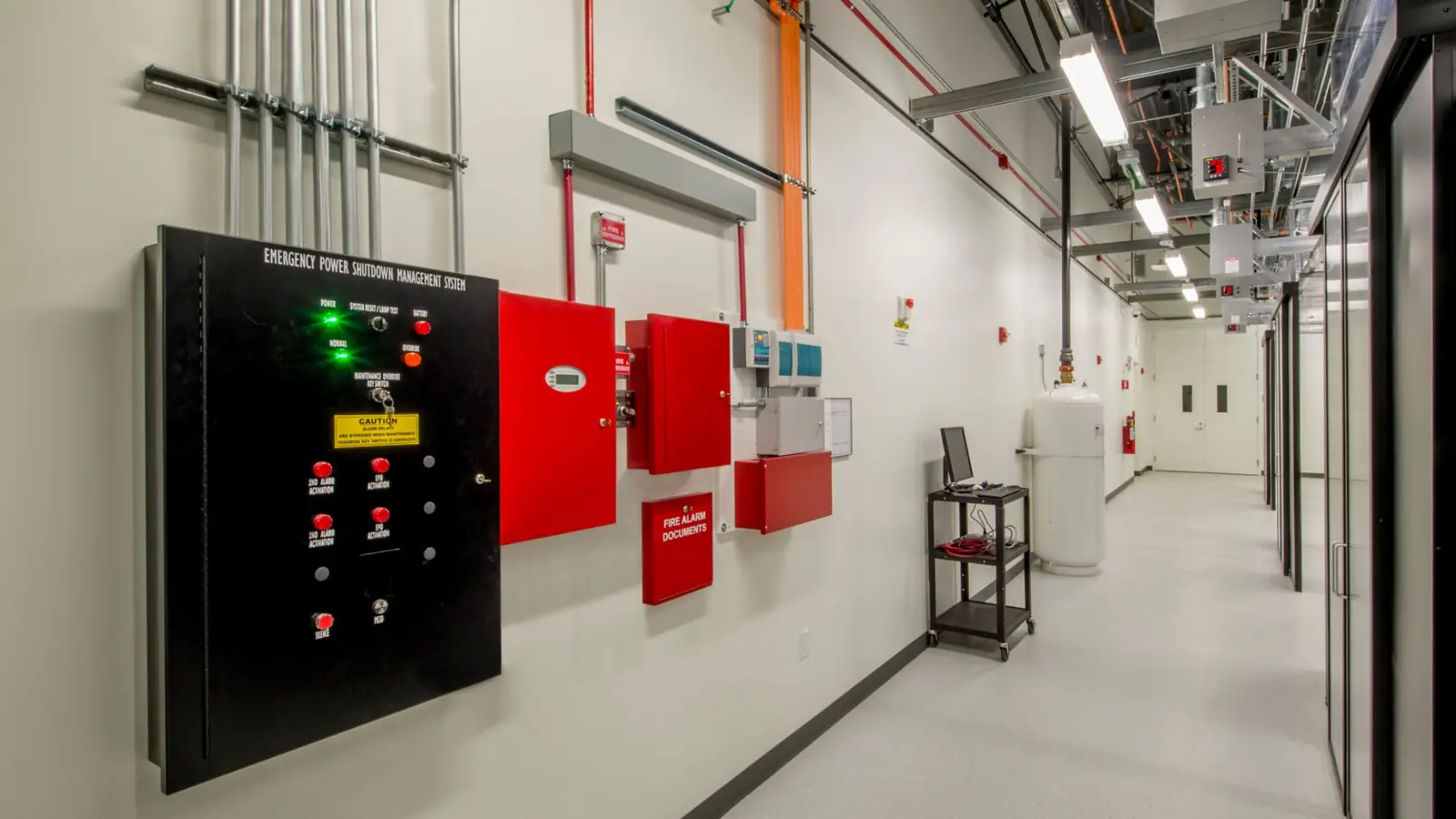
Never silence an activated fire alarm until supervisory staff confirm there is no fire. The Ontario Fire Code requires that confirmation, following the procedures in your fire safety plan.
A fire alarm panel shows three kinds of signals. An alarm signal means a detector, pull station, or sprinkler flow switch has reported a possible fire, and the building evacuates. A supervisory signal means something the system watches, such as a sprinkler valve, is out of its normal state, and a trouble signal means the alarm system itself has a fault and may not work when you need it.
Most property managers meet these signals the same way. A steady beep comes from the electrical room, an amber light glows on the panel, and a tenant wants to know whether to keep working. The right answer depends on which light is on and what the display says.
What does each fire alarm panel signal mean?
Every panel labels its lights. Many show alarm in red and supervisory and trouble in yellow or amber, but read the labels on your own panel before you rely on colour. The text display, if your panel has one, names the zone or device that raised the signal.
Alarm
An alarm signal starts when a device reports a possible fire. The usual sources are:
- A smoke or heat detector
- A manual pull station
- A sprinkler water flow switch, which reports water moving through the pipes
The building's alarm sounds, and occupants follow the evacuation procedures in the fire safety plan. On a monitored system, the panel also sends the signal to the monitoring station.
Supervisory
A supervisory signal means a device the system supervises has moved out of its normal position or range. The Fire Code's list of sprinkler supervisory devices shows where most of these signals come from:
- Valve supervisory switches, which report a sprinkler control valve that someone has closed or partly closed
- Tank water level devices
- Building and tank water temperature supervisory devices
A supervisory signal doesn't evacuate the building. It does tell you that part of your fire protection may be impaired. A closed sprinkler valve, for example, means the sprinklers on that valve may not flow in a fire.
Trouble
A trouble signal means the fire alarm system has found a fault in its own wiring, power, or equipment. Common causes include:
- An open circuit, from a broken wire or a loose connection
- A ground fault, where a wire touches metal conduit or framing
- Loss of normal AC power to the panel
- A low or failed backup battery
- A failed connection to the monitoring station
- A detector that someone removed, covered, or damaged
Until the fault is fixed, part of the system or all of it may not detect a fire or sound the alarm.
What is the difference between a supervisory signal and a trouble signal?
A supervisory signal reports a problem with something the fire alarm watches over. A trouble signal reports a problem with the fire alarm itself. A maintenance worker who closes a sprinkler valve to fix a leak and forgets to reopen it causes a supervisory signal. An electrician who drills through a detector cable during a renovation causes a trouble signal.
Neither signal calls for evacuation. Both mean the building has less protection than it was designed to have, and both need a contractor's attention the same day you see them.
What to do when the panel shows a trouble signal
Work through these steps in order:
- Read the display. Write down the time, the zone, and the exact message. A technician can diagnose "ground fault, zone 4" much faster than "the panel was beeping."
- Acknowledge the signal if your procedures allow it. Pressing acknowledge quiets the panel's buzzer. The trouble light stays on until the fault clears, which keeps the problem visible.
- Check for an obvious cause. Ask whether the power went out, whether an electrician or renovation crew is working in the building, and whether anyone removed or covered a detector.
- Tell your monitoring company what you see if the system is monitored, so the station knows the condition is being handled.
- Call your fire alarm contractor. A trouble that won't clear means the system isn't protecting the building as designed.
If the fault takes part of the system out of service, the Fire Code requires you to notify the fire department, the building's occupants, and supervisory staff (Article 6.3.1.3). Your fire safety plan should already describe the alternative measures that keep occupants safe while a system is down.
Leave three things alone: the panel's power supply, its batteries, and the controls that disable zones. Disconnecting any of them can turn a single fault into a building with no alarm at all.
What to do when the panel shows a supervisory signal
- Read which device raised the signal. The display or the zone chart tells you whether it came from a valve, a tank, or a temperature sensor.
- Find out whether work is under way. A sprinkler contractor may have closed a valve on purpose. The Fire Code requires the Chief Fire Official to be notified of any interruption to a sprinkler system (6.5.2.1), closed valves to be tagged (6.5.2.6), and the work to be planned so the system returns to service as quickly as possible (6.5.2.3).
- If nobody can explain the signal, call your sprinkler contractor before you touch anything. A valve can be closed for a repair that someone forgot to mention.
- Treat low temperature signals in winter as urgent. Water left in a cold sprinkler room can freeze, and frozen pipes can burst. Our guide to winterizing commercial sprinkler systems explains the cold-weather checks.
What to do when the panel shows an alarm
Treat every alarm signal as a real fire until someone proves otherwise. Follow the evacuation procedures in your fire safety plan and call 911 as those procedures direct.
The Fire Code sets a firm rule for what comes next. Article 6.3.1.5 says an activated fire alarm must not be manually silenced until supervisory staff confirm, following the approved procedures in the fire safety plan, that no fire emergency exists. Silencing an alarm early can stop people from leaving a building that is on fire.
If the alarm turns out to be false, note the device and the time. Repeat alarms from the same detector point to a fixable cause, and our post on why fire alarms keep going off walks through the common ones.
How often should someone check the fire alarm panel?
Every day. Article 6.3.2.3 of the Fire Code requires the central alarm and control facility to be checked daily for any indication of trouble in the system.
A daily check takes a minute or two. Your superintendent or security staff look at the panel, confirm that only the normal power light is on, and note anything else in a log kept beside it. That log shows a fire inspector the daily checks happen, and it gives your technician a timeline when a fault comes and goes.
The daily check doesn't replace the yearly visit. Once a year, a qualified technician inspects and tests every device to CAN/ULC-S536. Our post on the annual fire alarm inspection explains what that visit covers.
When to call Boss Fire
Call us when:
- A trouble signal won't clear after you've checked the obvious causes
- A supervisory signal comes from a sprinkler device and nobody can explain it
- The panel goes into alarm with no fire, more than once
- Your panel's display shows a message you don't recognize
Boss Fire's fire alarm technicians are registered with the CFAA, and our technicians are NFPA-certified. We serve commercial and industrial buildings across the GTA and the surrounding region, from Niagara to Oshawa and north to Barrie, and in the GTA we can be on site within 48 hours. For a fault that can't wait, the main line, 905-519-BOSS (905-519-2677), connects to 24/7 emergency dispatch.
See our fire alarm inspection and monitoring page for installation, inspection, and monitoring, and our sprinkler service page for valve and supervisory device work. For every other system a fire inspector checks, use our Ontario fire inspection checklist.
Sources and references
- Ontario Fire Code, O. Reg. 213/07, Division B, Article 2.8.2.1 (fire safety plan contents, including alternative measures during shutdowns)
- Ontario Fire Code, O. Reg. 213/07, Division B, Articles 6.3.1.3 (notification when a fire alarm system is shut down), 6.3.1.5 (silencing an activated alarm), and 6.3.2.3 (daily check of the central alarm and control facility)
- Ontario Fire Code, O. Reg. 213/07, Division B, Articles 6.5.2.1, 6.5.2.3, and 6.5.2.6 (sprinkler shutdowns and closed valves) and 6.5.5.7 (sprinkler supervisory devices)
Frequently Asked Questions
What does a trouble signal mean on a fire alarm panel? +
A trouble signal means the fire alarm system has found a fault in itself, such as a broken wire, a ground fault, lost power, a weak backup battery, or a failed connection to the monitoring station. Until someone fixes the fault, part or all of the system may not detect a fire or sound the alarm.
What is the difference between a supervisory signal and a trouble signal? +
A trouble signal points to a fault in the fire alarm system itself. A supervisory signal points to something the system watches over, such as a closed sprinkler control valve, low water in a tank, or a low building temperature. Neither one calls for evacuation, but both mean your fire protection may not work as designed.
Can I silence a beeping fire alarm panel? +
Most panels let you acknowledge a trouble or supervisory signal, which quiets the panel's own buzzer while the light stays on until someone fixes the cause. An activated fire alarm is different. The Ontario Fire Code says it must not be silenced until supervisory staff confirm, following the fire safety plan, that no fire emergency exists.
How often should someone check the fire alarm panel? +
Every day. Article 6.3.2.3 of the Ontario Fire Code requires the central alarm and control facility to be checked daily for any sign of trouble in the system. A short log beside the panel shows who checked and what they saw.
Who should I call about a fire alarm trouble or supervisory signal? +
Call your fire alarm contractor. For a supervisory signal from a sprinkler device, call your sprinkler contractor as well. Boss Fire's fire alarm technicians are registered with the CFAA, and the main line, 905-519-BOSS, connects to 24/7 emergency dispatch.
Need a Fire Safety Assessment?
Our certified technicians handle the full inspection cycle. Same-day service available across the GTA.