
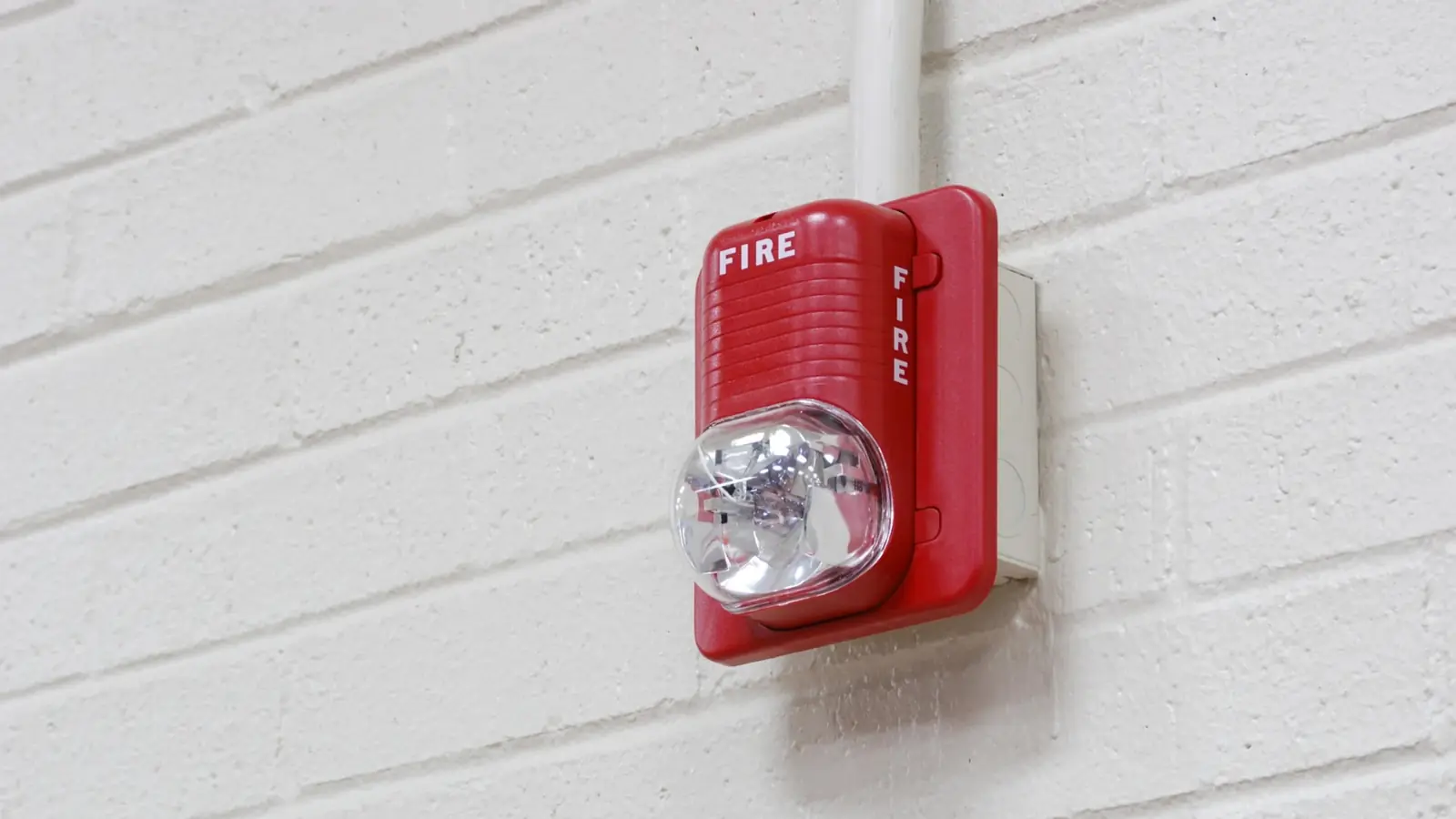
Ask your fire alarm technician for their course certificate. The Fire Code lets owners request it, and the owner is responsible for making sure the person doing the annual inspection is qualified.
The Ontario Fire Code requires every fire alarm system to be inspected and tested in conformance with CAN/ULC-S536, and the edition the Code names is the 2019 one. The annual inspection has to be done by a person who has completed a course acceptable to the Fire Marshal, or under that person's supervision. Between visits, someone at the building must check the control panel for trouble every day.
The Ontario Fire Code 2026 changes explain what moved in the Code this year. This post covers the inspection itself: what the technician tests, what falls to you between visits, and what to do with the report.
What does the Ontario Fire Code require for fire alarm inspection?
The core requirements sit in Subsection 6.3.2 of Division B:
- Inspection and testing to CAN/ULC-S536: Article 6.3.2.2 requires the fire alarm system, with or without voice communication, to be inspected and tested in conformance with the standard. Table 1.2.1.A lists the edition as S536-2019.
- A current system description: the description of the system that CAN/ULC-S536 calls for has to be kept current and kept in the building at an approved location.
- A record of every device: each device, component, and circuit inspected and tested gets a record showing whether it's in proper working order.
- Monitoring signals: if the system sends signals to the fire department through a monitoring service, the owner records whether the test signals were received.
- A daily check: Article 6.3.2.3 requires the central alarm and control facility to be checked daily for any indication of trouble.
Article 6.3.1.4 sums up the goal: fire alarm systems have to be maintained in operating condition.
What does the technician test during the annual inspection?
CAN/ULC-S536 sets the full test procedure. The standard is sold rather than published free, so this is an outline of what the annual visit covers. Your technician works through:
- The control unit, its indicators, and its trouble and supervisory signals
- The power supplies and standby batteries
- Each manual pull station
- Each smoke detector and heat detector, including the annual sensitivity testing of smoke detectors that Article 6.3.2.2 refers to
- Each horn, bell, and strobe
- The annunciator and the connections to other fire protection systems
- The signal to the monitoring station, if your system is monitored
Every device gets its own line in the record, marked as in proper working order or not. On a large system, that record runs to many pages, and it's the document a fire inspector asks to see.
What do you check between inspections?
The annual visit is one day a year. The Fire Code puts the rest on the building.
Every day
Article 6.3.2.3 requires the central alarm and control facility to be checked daily for any indication of trouble. In practice, someone on site looks at the panel or the annunciator each day and reports any trouble or supervisory light the same day.
Every month
CAN/ULC-S536 also sets shorter-interval tests, including monthly ones. Because the standard isn't free to read, ask your fire alarm technician for the monthly checklist that matches your panel, and log each test with the date and the name of the person who did it.
When part of the system is shut down
Under Article 6.3.1.3, if a fire alarm system or any part of it is shut down, the fire department and the building occupants must be notified, and so must the supervisory staff. That applies whether the shutdown is for repairs, a renovation, or a fault.
Who can inspect your fire alarm system?
The Fire Code's Division C sets out who can do fire alarm work. Any person who performs the annual tests or annual inspections, or who repairs, replaces, or alters fire alarm components, must have completed a program or course acceptable to the Fire Marshal. That person has to produce a copy of their certificate when the owner or the Chief Fire Official asks for it. Someone who hasn't finished the course can do the work only under the supervision Division C sets out.
The owner carries the responsibility. Article 6.3.2.1 requires the owner to make sure the person doing the annual work meets those requirements. Before the inspection starts, ask the technician for their certificate and keep a copy with your fire alarm records.
Boss Fire's fire alarm technicians are registered with the CFAA, the Canadian Fire Alarm Association.
What does the report show, and how long should you keep it?
The inspection report lists every device, component, and circuit that was inspected and tested, and whether each one is in proper working order. Deficiencies appear line by line, so you can see which pull station, detector, or signal failed and where it is.
Article 1.1.2.2 sets the retention rules:
- Keep each record at the building for at least two years
- Always keep the most recent record and the one before it
- Keep the initial verification or test report for any fire protection system installed after November 21, 2007 for the life of the system
If you can't find the original verification report for your system, ask the company that installed or verified it.
When someone asks for your "fire alarm inspection certificate", they mean one of two documents: the inspection report for the building, or the technician's course certificate. Keep both where a fire inspector can see them.
How do you warn tenants before fire alarm testing?
Testing sounds every horn and flashes every strobe in the building, sometimes more than once. A notice before testing keeps occupants from evacuating for a test, and from ignoring a real alarm on test day. A good notice:
- Gives the date and the time window for testing
- Says which floors or areas will hear alarms
- Tells occupants that any alarm outside the window is real and they should leave
- Names a contact on site for questions
Post it at the entrances and on each floor, and send it to tenants a few days ahead. Tell your monitoring company too, so test signals are expected and recorded.
What happens to deficiencies?
The Fire Code requires fire alarm systems to be maintained in operating condition, so every deficiency on the report needs a fix. Repairs, replacements, and alterations of fire alarm components fall under the same Division C training requirement as the annual inspection.
Keep the repair paperwork with the inspection report. If a fire inspector has already issued an order, our guide on clearing a Fire Code inspection order walks through the next steps.
A fire alarm zone map at the panel lets responders match each zone to an area of the building. Boss Fire produces zone maps and emergency floor plans through our passive graphics service.
Book your annual fire alarm inspection with Boss Fire
Boss Fire inspects, installs, and monitors fire alarm systems across the GTA and the surrounding region, from Niagara to Oshawa and north to Barrie. Our fire alarm technicians are registered with the CFAA, and Boss Fire carries $5 million in liability insurance. Quotes are itemized and answered the same business day, and in the GTA we can be on site within 48 hours.
If your panel shows trouble after hours, call our 24/7 emergency dispatch on the main line, 905-519-BOSS.
See our fire alarm inspection and monitoring page, or work through the full Ontario fire inspection checklist for every system an inspector checks.
Sources and references
- Ontario Fire Code, O. Reg. 213/07, Division B, Article 1.1.2.2 (records), Table 1.2.1.A (referenced editions), Articles 6.3.1.3 and 6.3.1.4 (shutdowns and operating condition), and Articles 6.3.2.1 to 6.3.2.3 (inspection and testing)
- Ontario Fire Code, O. Reg. 213/07, Division C, Articles 1.2.1.1 and 1.2.1.2 (qualifications for fire alarm work)
- CAN/ULC-S536, Standard for Inspection and Testing of Fire Alarm Systems (2019 edition, as listed in the Fire Code)
Frequently Asked Questions
How often should I get a fire alarm inspection in Ontario? +
The Ontario Fire Code requires fire alarm systems to be inspected and tested in conformance with CAN/ULC-S536, which includes a full annual inspection by a qualified person. Between annual visits, the central alarm and control facility has to be checked daily for trouble, and the standard sets shorter-interval tests as well.
What are the legal requirements for fire alarms in Ontario? +
The Fire Code requires fire alarm systems to be kept in operating condition and inspected and tested to CAN/ULC-S536. The owner keeps a current system description in the building, a record of every device, component, and circuit tested, and a daily check of the control facility. Records stay at the building for at least two years.
What is a fire alarm inspection certificate? +
People use the phrase for two documents. One is the inspection report for your building, which lists every device and whether it's in proper working order. The other is the technician's certificate showing they completed a course acceptable to the Fire Marshal, which you're entitled to see on request.
Who can do an annual fire alarm inspection in Ontario? +
A person who has completed a program or course acceptable to the Fire Marshal, or someone working under that person's supervision. A qualified person has to produce a copy of their certificate when the owner or the Chief Fire Official asks, and the owner is responsible for making sure the requirement is met.
Do I have to tell tenants before fire alarm testing? +
If any part of the fire alarm system is shut down, the Fire Code requires the fire department, building occupants, and supervisory staff to be notified. Even when nothing is shut down, a notice before testing tells occupants when alarms are expected and that any alarm outside that window is real.
Need a Fire Safety Assessment?
Our certified technicians handle the full inspection cycle. Same-day service available across the GTA.