
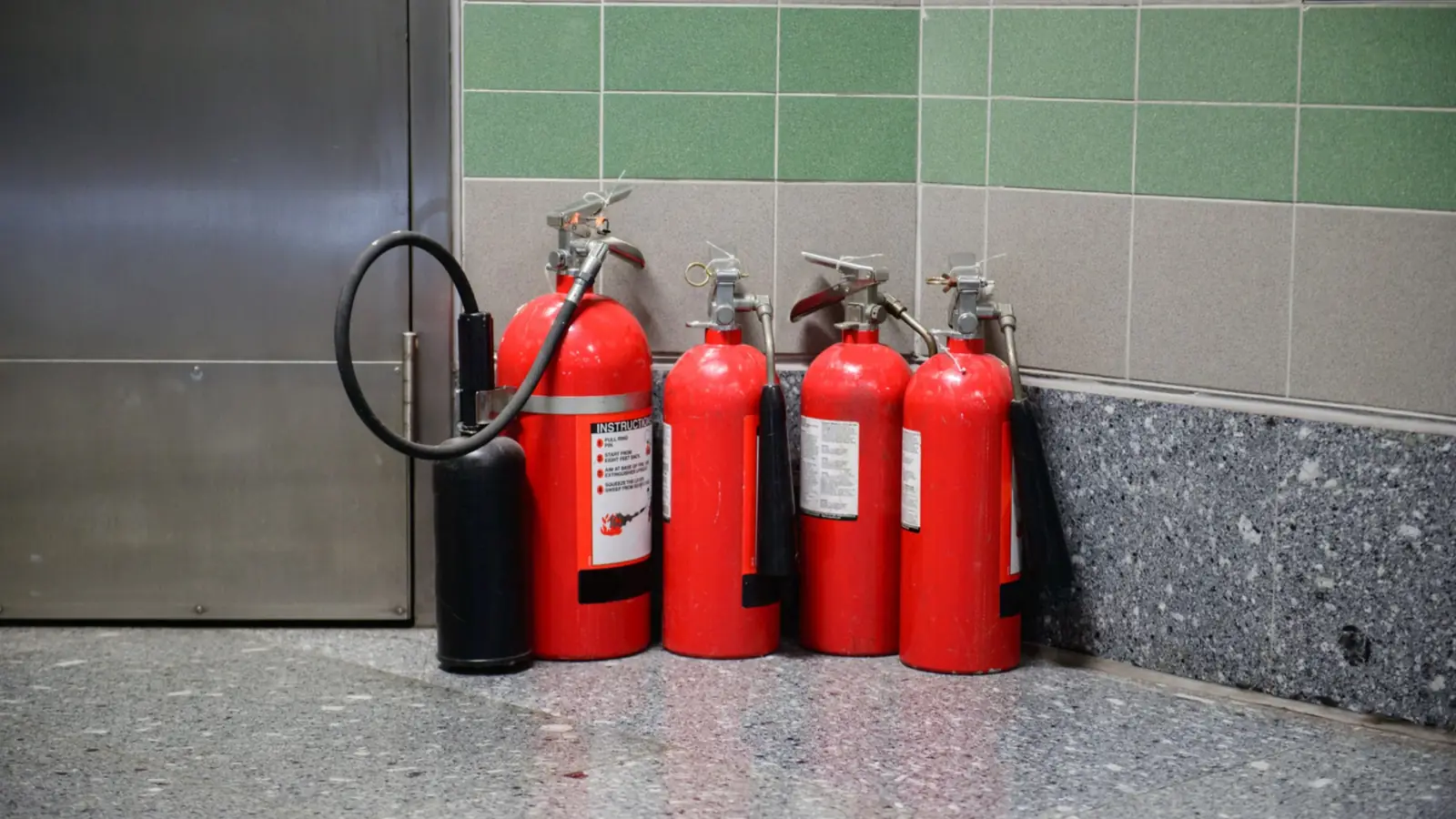
Check the label, not the colour of the cylinder. The rating printed on the label, such as 2-A:10-B:C, tells you which classes of fire the unit is approved for.
Every commercial building in Ontario needs portable extinguishers rated for Class A fires, and the Ontario Fire Code adds other types where the hazard calls for them. Kitchens need Class K, rooms full of electrical equipment need Class C, areas with flammable liquids need Class B, and shops that handle combustible metals need Class D. Most buildings end up with two or three types, matched to the rooms they protect.
What are the 5 classes of fire?
The Ontario Fire Code sorts fires by the material that is burning. Each extinguisher carries a rating for the classes it can fight.
- Class A: ordinary combustibles such as wood, paper, cloth, and cardboard
- Class B: flammable and combustible liquids, such as fuels, solvents, and paints
- Class C: fires in energized electrical equipment
- Class D: combustible metals, such as magnesium and titanium
- Class K: cooking oils and fats in commercial cooking equipment
The class matters because the wrong agent can make a fire worse. Water conducts electricity, and spraying water or a water-based agent on burning cooking oil can spread the fire.
How to read the rating on an extinguisher label
New and replacement extinguishers in Ontario have to be listed and rated, and the rating appears on the label as a short code such as 2-A:10-B:C. Read it one class at a time:
- The number before A shows the unit's capability on ordinary combustibles. A 4-A unit handles a larger Class A fire than a 2-A unit.
- The number before B shows its capability on flammable liquid fires.
- The letter C has no number. It means the agent is suitable for fires in live electrical equipment.
Those numbers drive how many extinguishers a building needs, because the Fire Code's coverage tables are written in rating units. A higher Class A rating lets one extinguisher protect more floor area. Our guide to how many fire extinguishers you need works through that math.
If a label shows no letter for a class, the unit is not approved for that class.
The main types of fire extinguishers
ABC dry chemical
The ABC dry chemical unit is the multipurpose extinguisher in most offices, stores, and warehouses. Its label carries A, B, and C ratings, so one unit covers ordinary combustibles, flammable liquids, and electrical fires. The fine powder it discharges does leave a residue that has to be cleaned up afterward, and it can damage sensitive electronics.
Carbon dioxide (CO2)
A CO2 extinguisher discharges a gas that smothers the fire and leaves no residue. Most CO2 units carry B and C ratings with no A rating. That makes them a common choice next to electrical panels and equipment. A CO2 unit can't be the only extinguisher protecting a general area, because the Fire Code requires building protection suitable for Class A fires.
Wet chemical (Class K)
A wet chemical extinguisher is built for cooking oil and fat fires. The agent cools the oil and forms a layer on the surface that keeps the fire from flaring back. The Fire Code requires an extinguisher suitable for Class K fires to protect commercial cooking operations, and wet chemical units are the usual choice.
Class D dry powder
Class D extinguishers use a dry powder made for burning metals. A Class D agent has to suit the specific metal in use, so the right unit for a magnesium shop may differ from the right unit for a titanium shop. Check the label against the metals you handle.
Clean agent and water mist
Clean agent and water mist extinguishers protect areas where powder residue would cause damage, such as server rooms, labs, and archives. The classes they carry vary by model and size. Read the label rating before you rely on one for an area, and don't assume it covers Class A or Class B fires until the label says so.
Which extinguisher goes where
Offices, retail floors, and common areas
These areas need extinguishers rated for Class A fires, and an ABC unit is the usual choice. The Fire Code grades offices as light hazard and stores as ordinary hazard. The hazard grade sets how much floor area each extinguisher can cover.
Electrical and server rooms
The Fire Code requires extinguishers suitable for Class C fires in or near service rooms containing electrical equipment. An ABC unit meets that rule. If powder residue would damage the equipment, add a CO2 or clean agent unit with a C rating on its label.
Commercial kitchens
Cooking operations need extinguishers suitable for Class K fires. The kitchen's general area and the dining room still need Class A coverage. A kitchen hood suppression system is a separate requirement; our post on commercial kitchen fire suppression systems covers its inspection schedule.
One rule catches older restaurants. Kitchens protected by wet chemical or dry chemical extinguishers that were not listed for Class K, but that met the Fire Code on December 31, 2014, may keep them. That exception ends when a unit comes due for its internal examination or hydrostatic test, needs refilling after use, or gets damaged. At that point, the replacement has to be suitable for Class K fires.
Warehouses and storage areas
Warehouses need Class A protection, and an ABC unit fits most of them. The Fire Code grades a warehouse as ordinary hazard unless it holds high-piled combustibles. Those warehouses, and mercantile storage areas, are graded extra hazard, and the smallest 2-A extinguisher is not acceptable there.
Lithium-ion battery storage needs extra thought. Our post on AVD fire extinguishers for lithium-ion batteries explains where they belong.
Shops and plants with flammable liquids
Areas with flammable or combustible liquids need extinguishers rated for Class B fires. Where liquids sit in open containers deeper than 6 mm, the Fire Code sets a minimum Class B rating based on the surface area of the largest container, and nobody should have to travel more than 15 m to reach the extinguisher.
Metal shops
Shops that machine, grind, or store combustible metals need Class D extinguishers or agents suited to the metal. The Fire Code places that equipment no more than 25 m from the Class D hazard.
Parking garages
The Fire Code grades parking garages as ordinary hazard, and they need Class A protection like any other area. An ABC unit adds a Class B rating for fuel.
How Boss Fire matches extinguishers to your building
A site visit settles which types you need, and how many of each. Your technician walks each area, checks what could burn there, confirms the hazard grade, and compares the units on your walls with the Fire Code's requirements. You get an itemized quote for anything missing, and nothing is installed until you approve it.
Boss Fire serves commercial and industrial buildings across the GTA and the surrounding region, from Niagara to Oshawa and north to Barrie. Our technicians are NFPA-certified, quotes are answered the same business day, and in the GTA we can be on site within 48 hours. Annual inspection of the extinguishers you already have starts at $40 per extinguisher, per year, plus one service call fee per visit, and our post on what fire extinguisher inspection costs explains what that covers.
See our fire extinguisher inspection and service page for what a visit includes, and our kitchen hood suppression page if you run a commercial kitchen. For the rest of your building, the Ontario fire inspection checklist covers every system an inspector looks at.
Sources and references
- Ontario Fire Code, O. Reg. 213/07, Division A, Article 1.4.1.2 (definitions of fire classes)
- Ontario Fire Code, O. Reg. 213/07, Division B, Articles 6.2.1.1 and 6.2.2.1 (listing and rating), 6.2.5.1 to 6.2.5.3 (hazard grades), 6.2.6.2 (Class A protection), 6.2.6.9 (open containers of liquids), 6.2.6.12 (Class K), 6.2.6.13 (Class C), 6.2.6.16 (Class D), and Table 6.2.6.A
- NFPA 10, Standard for Portable Fire Extinguishers
Frequently Asked Questions
What are the 5 classes of fire? +
Class A is ordinary combustibles such as wood, paper, and cloth. Class B is flammable and combustible liquids. Class C is fire in energized electrical equipment. Class D is combustible metals, and Class K is cooking oils and fats in commercial kitchens.
What are the 3 most common types of fire extinguishers in a commercial building? +
ABC dry chemical units protect most offices, stores, and warehouses. Carbon dioxide (CO2) units suit areas with electrical equipment, because they leave no residue. Wet chemical Class K units protect commercial cooking operations, where the Ontario Fire Code requires them.
Can I use a CO2 extinguisher instead of an ABC extinguisher? +
Only where the label shows the ratings the area needs. Most CO2 units carry B and C ratings with no A rating. The Ontario Fire Code requires the extinguishers that protect a building to be suitable for Class A fires, so a CO2 unit alone can't cover a general area.
What fire extinguisher does a commercial kitchen need in Ontario? +
The Ontario Fire Code requires extinguishers suitable for Class K fires to protect cooking operations. The rest of the kitchen and dining area still needs Class A coverage, which an ABC unit provides. A kitchen hood suppression system is a separate requirement with its own inspection schedule.
Is an ABC extinguisher safe on electrical fires? +
Yes. The C in the rating means the agent is suitable for fires in energized electrical equipment. The powder does leave a residue, so if it would harm a server room or sensitive equipment, add a CO2 or clean agent unit with a C rating as well.
Need a Fire Safety Assessment?
Our certified technicians handle the full inspection cycle. Same-day service available across the GTA.