
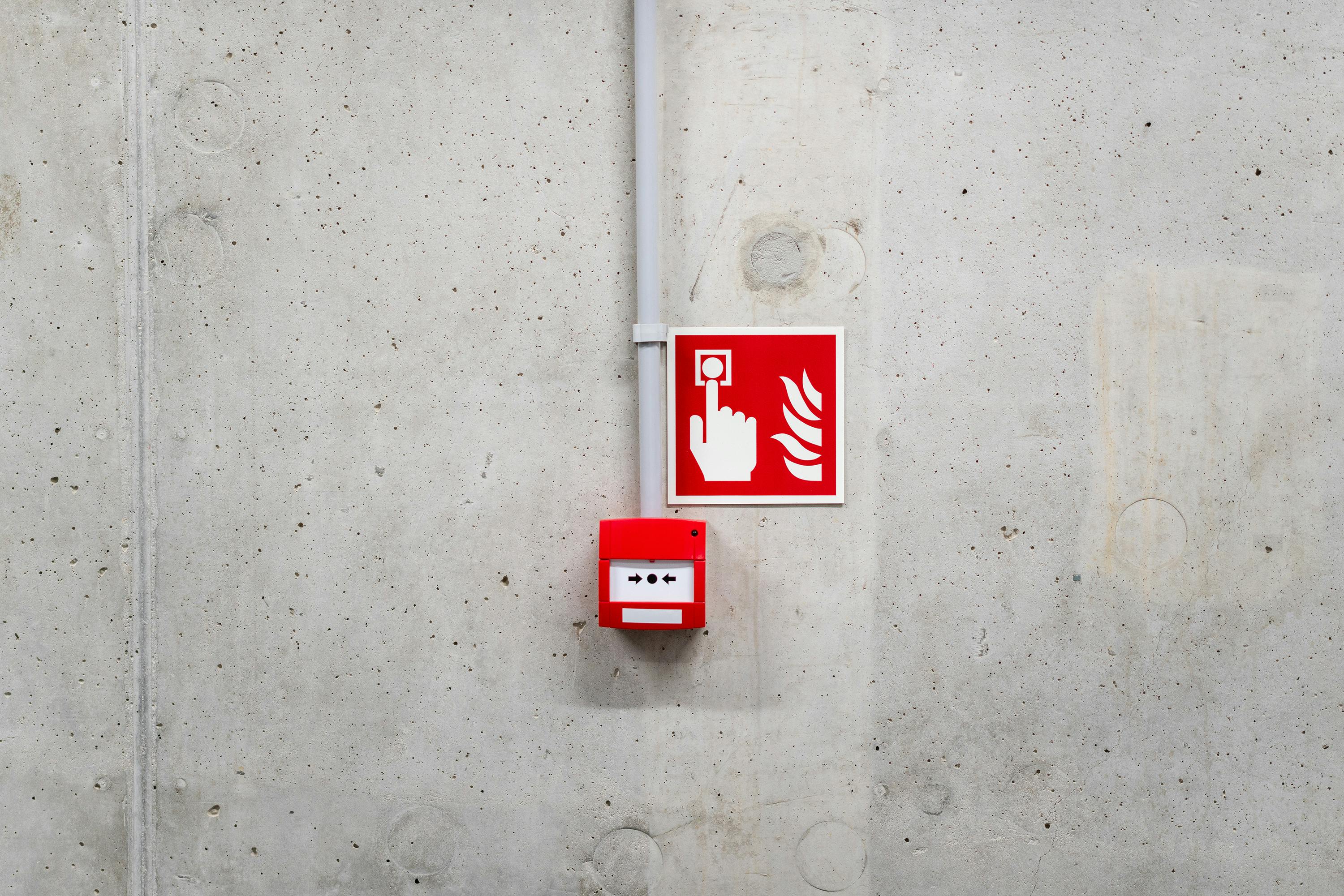
If you are not certain whether your current fire protection setup meets the 2026 requirements, the fastest way to find out is a site assessment by an NFPA-certified technician. We review your alarm system, documentation, CO alarm placement, and inspection records at no charge.
On January 1, 2026, the Ontario Fire Code changed. Not tweaked — changed. Industry bodies are calling it the most significant overhaul of provincial fire safety standards in 20 years. The changes affect fire alarm inspections, CO alarm placement, documentation requirements, hazardous materials storage, and integrated life safety system testing. They apply to commercial, industrial, institutional, and mixed-use properties across the province.
The penalty for non-compliance is no longer just a compliance order and a deadline. Fines for corporations now reach $500,000. Ontario municipalities are rolling out Administrative Monetary Penalties — tickets issued on the spot, without a court process. The era of "we'll deal with it next inspection" is over.
Here is what changed, who it affects, and what your business needs to do about it.
Change 1: Fire Alarm Inspections Now Governed by CAN/ULC-S536:2019
This is the biggest change for commercial property owners and the one that will cost the most to ignore. Ontario has formally adopted CAN/ULC-S536:2019 — the updated national standard for the inspection and testing of fire alarm systems — replacing the 2004 edition that had been in use for over two decades.
Under the old standard, inspectors could use sampling — testing a representative portion of devices in a large system rather than every single one. That practice is now prohibited. Under CAN/ULC-S536:2019:
- Every device must be tested individually — no sampling, no shortcuts, no exceptions
- Batteries and power supplies must be load-tested, not simply checked with a voltmeter
- Inspections must use the official 2019 ULC forms — custom checklists your contractor may have used previously are no longer acceptable
- Documentation requirements are substantially more rigorous — technician attendance logs, deficiency tracking, and corrective action records must all be maintained
- Inspection times are 20 to 35 percent longer than under the previous standard — budget for extended service windows and additional suite access coordination in multi-unit buildings
Industry estimates put the increase in annual fire alarm inspection costs at up to 35% for complex, multi-zone, or networked systems. If your current maintenance contract predates 2026, review it now to confirm it explicitly references CAN/ULC-S536:2019 compliance. A contract written against the old standard does not automatically satisfy the new one.
Alongside S536:2019 for existing systems, Ontario also adopted CAN/ULC-S537:2019 — the verification standard for new or modified fire alarm installations. If you are building out a new commercial space, adding a floor, or modifying an existing alarm system in 2026, your contractor must verify the installation to S537:2019. A verification certificate must be issued and kept on site.
Change 2: Expanded CO Alarm Requirements
Introduced through O. Reg. 87/25 and effective January 1, 2026, the CO alarm requirements in the Ontario Fire Code now align with the 2020 National Fire Code of Canada. The changes primarily affect residential and care occupancies, but commercial property owners with residential units, care facilities, or mixed-use spaces are directly impacted.
Under the updated Section 2.16 of Division B of the Ontario Fire Code, a CO alarm must be installed in any existing home or residential occupancy that has:
- A fuel-burning appliance (furnace, water heater, stove running on natural gas, propane, oil, or wood)
- A fireplace of any type
- An attached garage
- Air for heating sourced from a fuel-burning appliance located outside the living space
If any of those conditions apply, CO alarms must now be installed adjacent to each sleeping area and on every storey of the building, including storeys without sleeping areas. The previous requirement — one CO alarm per unit — no longer satisfies the code.
Property managers of multi-unit residential buildings, mixed-use commercial and residential properties, long-term care facilities, and retirement homes need to audit their CO alarm placement immediately. The new placement requirements apply to existing buildings, not just new construction. If your units were compliant under the old placement rule, they may not be compliant today.
Change 3: Documentation and Record-Keeping Now Enforceable
The 2026 changes put documentation at the centre of compliance in a way that earlier versions of the code did not. The shift matters because fire inspectors are now checking records, not just equipment.
For any building that requires a Fire Safety Plan — which includes multi-residential, assembly, business, mercantile, industrial, and care occupancies — the plan must be updated to reflect 2026 requirements and kept on site. A compliant fire safety binder or documentation system should include:
- Current Fire Safety Plan, updated to include CO devices, revised inspection procedures, and new emergency protocols
- Fire alarm inspection reports on official CAN/ULC-S536:2019 forms, with deficiency tracking and sign-off
- Verification certificate for any new or modified alarm system (CAN/ULC-S537:2019)
- Sprinkler system inspection and testing records
- Emergency lighting and exit sign testing logs
- Fire drill records and staff training logs
- Integrated system test reports (where applicable)
If a fire inspector arrives and these records are incomplete, missing, or out of date, the building is non-compliant — even if every piece of equipment is working perfectly. Documentation is now as much a compliance item as the hardware itself.
Change 4: Integrated Life Safety System Testing
Buildings with interconnected fire and life safety systems — fire alarms linked to sprinkler monitoring, smoke control, elevators, emergency power, or HVAC shutdown — now face more rigorous requirements for demonstrating that the whole chain works together.
Under the 2026 code, complex buildings must conduct integrated testing to CAN/ULC-S1001, verifying that each system responds correctly when another triggers. The testing must be coordinated, documented, and periodically repeated — commonly on a five-year cycle.
This affects high-rise residential and commercial towers, hospitals, large assembly spaces, shopping centres, campuses, and any building with significant system interdependency. If your building has never had integrated testing performed, 2026 is the year to get it done.
Change 5: Hazardous Materials Storage Standards Updated
Commercial and industrial buildings that store flammable liquids, chemicals, aerosol products, combustible dust, or dangerous goods must now comply with updated standards harmonized with the 2020 National Fire Code of Canada. The previous provincial standards for these materials have been replaced.
Cannabis extraction facilities face a separate, strict set of fire safety requirements that are now formally encoded in the 2026 Fire Code. Agricultural operations — including large farm buildings constructed after January 1, 2025 and exceeding 600 square metres — must also meet commercial-equivalent fire safety standards for the first time.
Change 6: Penalties Are Now Substantially Higher
The enforcement framework changed alongside the code itself. Fines under the Ontario Fire Code now reach $50,000 for individuals and $500,000 for corporations.
Beyond the formal fine structure, Ontario municipalities are moving toward Administrative Monetary Penalties (AMPs) — a ticket-based system that allows fire officials to issue financial penalties on the spot for Fire Code violations, without requiring a court proceeding. AMPs remove the buffer that previously existed between a non-compliance finding and financial consequence.
What Commercial Businesses Need to Do Now
If your business operates in a commercial, industrial, or mixed-use property in Ontario, the following checklist reflects the minimum actions required to be compliant under the 2026 Fire Code:
- Confirm your fire alarm inspection contractor is using CAN/ULC-S536:2019 — ask explicitly. If they are still using custom forms or the old 2004 standard, they are not delivering a compliant inspection.
- Review your current maintenance contract — ensure it references S536:2019 and includes the official ULC reporting forms.
- Audit CO alarm placement — if your building has residential units or care facilities, confirm alarms are placed on every storey and adjacent to all sleeping areas, not just one per unit.
- Update your Fire Safety Plan — add CO devices, revised inspection procedures, integrated testing protocols, and current staff training records.
- Build a documentation system — all inspection reports, drill logs, deficiency tracking, and corrective action records must be accessible on site.
- Schedule integrated testing if your building has interconnected systems — alarm, sprinklers, elevators, smoke control, or emergency power.
- Check your hazardous materials storage if you store flammable liquids, aerosols, or combustible dust — the governing standards have changed.
How Boss Fire Is Helping GTA Businesses Transition
Our technicians are fully trained on the 2026 Ontario Fire Code changes and are delivering compliant inspections under CAN/ULC-S536:2019 across the GTA. Every fire alarm inspection we perform uses the official 2019 ULC forms, load-tests batteries and power supplies, and produces the documentation package your building needs to satisfy a fire inspector on arrival.
For businesses unsure where to start, we offer a 2026 compliance review — a structured site assessment that maps your current fire protection setup against the new code requirements and identifies any gaps. We cover fire alarms, CO alarm placement, emergency lighting, extinguishers, documentation, and Fire Safety Plan currency.
Frequently Asked Questions
What changed in the Ontario Fire Code in 2026? +
Effective January 1, 2026, the Ontario Fire Code adopted CAN/ULC-S536:2019 as the mandatory standard for fire alarm inspections, replacing the 2004 edition. It also introduced expanded CO alarm placement requirements, stricter documentation rules, more rigorous integrated life safety system testing, and updated standards for hazardous materials storage in commercial and industrial buildings.
Does the 2026 Ontario Fire Code apply to commercial businesses? +
Yes. The 2026 changes apply to most non-residential occupancies including commercial, industrial, institutional, and mixed-use buildings. The fire alarm inspection changes under CAN/ULC-S536:2019 affect any building with a fire alarm system. Commercial buildings with attached residential units or care facilities are also directly affected by the CO alarm changes.
What is CAN/ULC-S536:2019 and why does it matter? +
CAN/ULC-S536:2019 is the updated national standard for fire alarm system inspection and testing. Ontario adopted it January 1, 2026, replacing the 2004 edition. Every individual device must now be tested — sampling is no longer permitted. Inspections must use official 2019 ULC forms, batteries must be load-tested, and documentation requirements are significantly more rigorous. Inspections typically take 20 to 35 percent longer than before.
What are the new CO alarm requirements in Ontario for 2026? +
As of January 1, 2026, CO alarms must be installed adjacent to each sleeping area and on every storey of any existing residential occupancy that has a fuel-burning appliance, a fireplace, or an attached garage. These requirements are set out in Section 2.16 of Division B of the Ontario Fire Code as amended by O. Reg. 87/25. The previous requirement of one CO alarm per unit no longer satisfies the code.
What are the fines for Ontario Fire Code violations in 2026? +
Under the updated Ontario Fire Code, fines for individuals can reach $50,000. For corporations, fines can reach $500,000. Ontario municipalities are also moving toward Administrative Monetary Penalties — tickets that can be issued immediately for Fire Code violations without a court proceeding.
Do I need to update my Fire Safety Plan for 2026? +
Yes. Any building that requires a Fire Safety Plan — including multi-residential, assembly, business, mercantile, industrial, and care occupancies — must review and update it to reflect the 2026 changes. This includes adding CO devices, updated inspection procedures, integrated testing records, and staff training documentation. The updated plan must be kept on site and available to fire officials on request.
Need a Fire Safety Assessment?
Our certified technicians handle the full inspection cycle. Same-day service available across the GTA.