
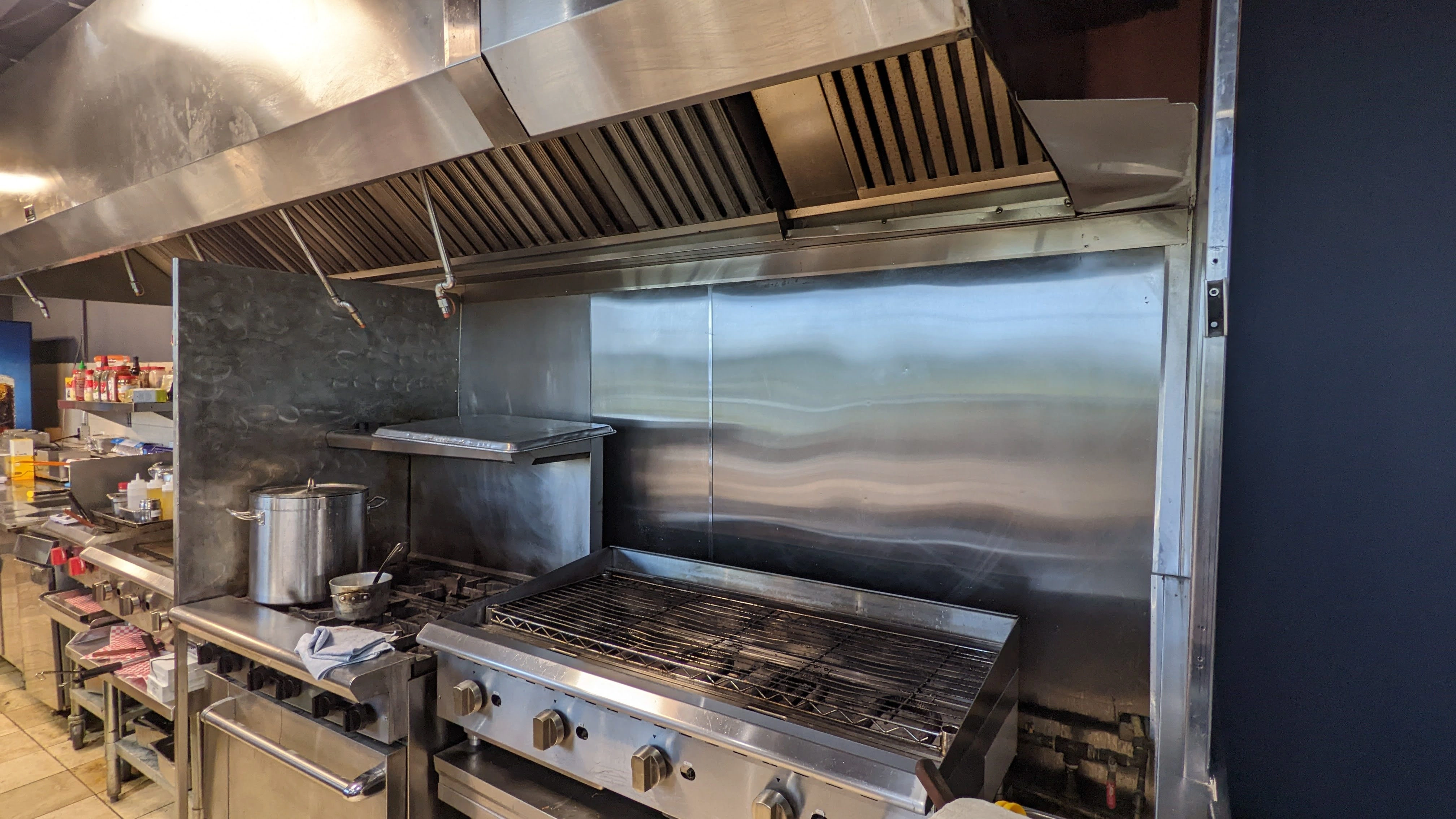
Pro tip: kitchen hood cleaning and fire suppression inspection are two separate requirements. NFPA 96 requires the suppression system to be inspected every six months, even if your hood was just cleaned.
If you run a restaurant, a bakery, a hotel kitchen, or any commercial cooking operation in the Greater Toronto Area, there is a system above your cooking line that most owners never think about until an inspector asks for paperwork. It is the wet chemical fire suppression system built into your hood, and Ontario law requires it to be inspected on a strict schedule.
Cooking equipment is the leading cause of commercial kitchen fires. Grease, high heat, and open flame are a constant risk, and the suppression system over your line is the one thing designed to stop a flare-up before it spreads into the ductwork and the building. This guide explains what the code requires, what a proper inspection covers, and the gaps that put most kitchens at risk.
What a kitchen suppression system actually does
The system over a commercial cooking line is a wet chemical suppression system, often called a K-Class system after the class of fire it fights. When a fire starts, fusible links or a detection line trigger the system, and three things happen at once:
- A wet chemical agent discharges through nozzles aimed at the cooking surfaces and into the hood.
- The fuel and power to the cooking equipment shut off automatically.
- An alarm sounds so people know to evacuate.
That automatic fuel shutoff matters more than most owners realize. If the gas keeps flowing, the fire suppresses for a moment, then reignites the second the agent runs out. A system that cannot shut off the fuel is not doing its job.
Ontario also requires a portable K-Class fire extinguisher in the kitchen as a backup for the suppression system. It is there to handle a small cooking fire the fixed system does not fully knock down.
How often does the code require inspection
This is where most kitchens get tripped up. Under NFPA 96, the standard referenced by the Ontario Fire Code, your kitchen fire suppression system must be inspected and serviced at least every six months by a trained, qualified technician. That means two full service visits every year, every year, with no exception based on how old the system is or how good it looks.
During that semi-annual service, a technician checks the parts that fail silently:
- Nozzle condition and correct aim, since grease buildup can block a nozzle.
- Fusible links, which are replaced on a set schedule because heat and grease degrade them.
- The agent cylinder level and pressure.
- Piping integrity.
- The manual pull station, which staff use to trigger the system by hand.
- The automatic fuel and power shutoff.
- The alarm connection.
There is also a 12-year requirement: the wet chemical cylinder itself must be hydrostatically tested every twelve years to confirm the pressure vessel is still sound.
Cleaning is not the same as inspection
Here is the single most common and most expensive mistake. Many owners assume that when the hood cleaning crew comes through, the suppression system is covered. It is not. Hood cleaning and suppression inspection are two separate requirements with two separate purposes.
Hood and exhaust cleaning removes the grease that builds up inside the hood, ducts, and exhaust fan. NFPA 96 sets the cleaning frequency by how much and what you cook:
- Monthly for solid fuel cooking, such as wood or charcoal.
- Quarterly for high-volume cooking, such as charbroiling, wok cooking, or 24-hour operations.
- Semi-annually for moderate-volume operations, where most sit-down restaurants fall.
- Annually for low-volume operations, such as seasonal or occasional-use kitchens.
Cleaning also has to be done to bare metal whenever measurable grease is found, not just on the calendar. A clean hood and a serviced suppression system are two different jobs. Passing one does not satisfy the other.
What happens if you skip it
A failed or missing inspection is not a minor paperwork issue. A fire marshal who asks for your suppression service record and gets a faded sticker with no scope, no technician name, and no date can write you up on the spot. The bigger risk is your insurance. Most commercial property insurers require documented compliance as a condition of coverage, and a claim can be denied outright if the records are missing when a fire happens.
Then there is the fire itself. A blocked nozzle, an expired agent, or a fuel shutoff that does not trigger turns a small grease flare into a total kitchen loss. The whole point of the system is to work the one time you need it, and the only way to know it will is to have it inspected and documented on schedule.
What Boss Fire handles for GTA kitchens
Boss Fire installs, inspects, and maintains commercial kitchen hood and wet chemical suppression systems across the Greater Toronto Area. Our NFPA-certified technicians handle the semi-annual inspection, the fusible link replacements, the K-Class extinguisher tagging, and the documentation your insurer and the fire marshal will ask for. We serve commercial and industrial kitchens only, from single-location restaurants to multi-site national accounts.
If you are not sure when your system was last serviced, or whether your current provider is actually inspecting the suppression system and not just cleaning the hood, we can review it. Call 905-519-2677 or request your free site assessment, and we will tell you exactly where you stand.
Frequently Asked Questions
How often does a commercial kitchen fire suppression system need to be inspected in Ontario? +
Under NFPA 96, referenced by the Ontario Fire Code, a commercial kitchen wet chemical suppression system must be inspected and serviced at least every six months by a trained, qualified technician. That means two full service visits per year, regardless of the system's age or apparent condition. High-volume and solid fuel kitchens may need more frequent service based on grease accumulation.
Is hood cleaning the same as a fire suppression inspection? +
No. Hood cleaning removes grease from the hood, ducts, and exhaust fan. Suppression inspection tests the wet chemical system that puts out a fire, including nozzles, fusible links, agent level, and the automatic fuel shutoff. They are two separate requirements. Having your hood cleaned does not satisfy the semi-annual suppression inspection, and passing one does not cover the other.
What is a K-Class fire extinguisher and do I need one? +
A K-Class extinguisher is a wet chemical portable extinguisher made for commercial kitchen cooking oil and grease fires. Ontario requires one in commercial kitchens as a backup to the fixed hood suppression system. It handles small cooking fires that the fixed system does not fully knock down. It must be inspected and tagged on the standard annual schedule like any other extinguisher.
What does a kitchen suppression inspection actually check? +
A proper semi-annual inspection checks nozzle condition and aim, fusible link condition, agent cylinder level and pressure, piping integrity, the manual pull station, the automatic fuel and power shutoff, and the alarm connection. The technician confirms the system will discharge, shut off the fuel, and sound the alarm at the same time. You should receive dated documentation listing what was tested and any deficiencies found.
What happens if my kitchen suppression system fails an inspection? +
Deficiencies must be corrected promptly, and many authorities allow a short correction window for non-urgent issues. Urgent problems, such as an expired agent or a broken fuel shutoff, may require the system to be taken out of service until fixed. Beyond fire marshal penalties, missing or incomplete records can lead an insurer to deny a claim after a fire, so keeping documented, up to date service records matters.
Need a Fire Safety Assessment?
Our certified technicians handle the full inspection cycle. Same-day service available across the GTA.