
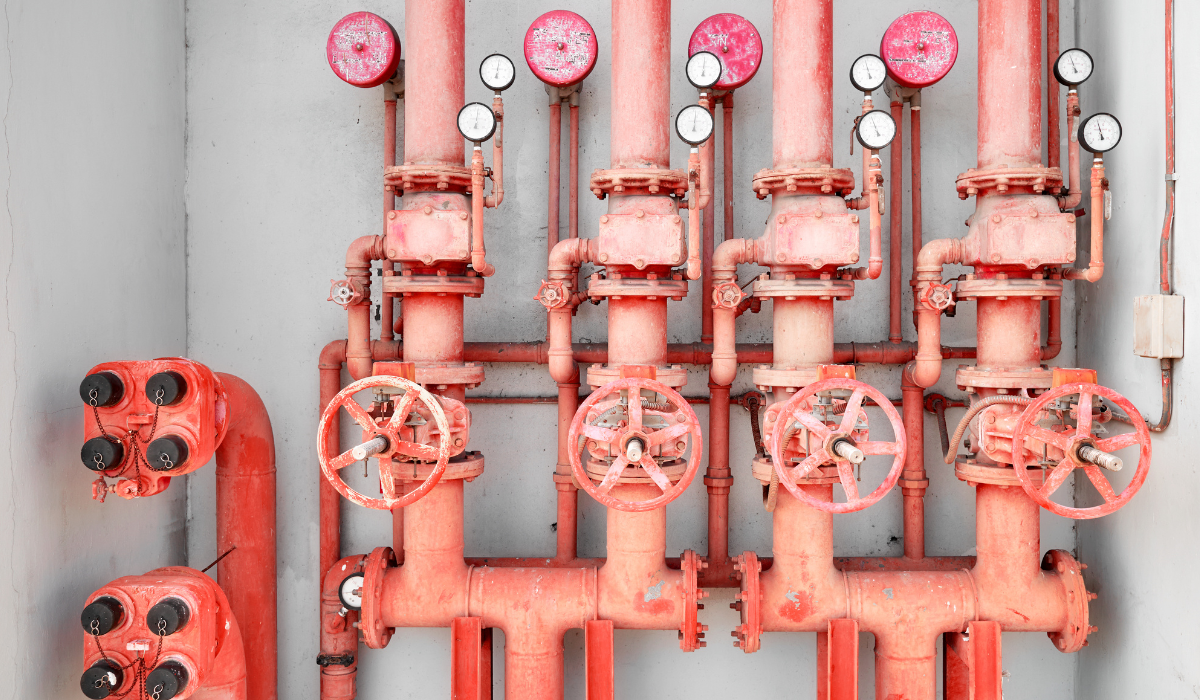
Pro tip: the leading cause of sprinkler failure in a real fire is a control valve left closed after maintenance. NFPA 25 requires frequent valve checks specifically to catch this before it matters.
A fire sprinkler system is one of the most effective pieces of fire protection a building can have. It works automatically, it targets the fire at the source, and it often controls a fire before the fire department arrives. But a sprinkler system is also easy to take for granted, because it sits quietly overhead for years and gives no obvious sign when something has gone wrong inside the pipes or at a control valve.
That is the whole reason for scheduled inspection and testing. The leading cause of sprinkler system failure in an actual fire is not a dramatic mechanical breakdown. It is a control valve that was left closed after maintenance. Regular inspection catches exactly that kind of problem. This guide walks through the full schedule for commercial and industrial buildings in the Greater Toronto Area.
The standard behind sprinkler inspection
Water-based fire protection systems are inspected, tested, and maintained under NFPA 25, the Standard for the Inspection, Testing, and Maintenance of Water-Based Fire Protection Systems. The Ontario Fire Code also sets out its own recurring sprinkler requirements that line up with this framework.
One point NFPA 25 makes clear is who is responsible. The obligation to keep the system compliant and to keep the records rests with the building owner, even when a lease hands the day to day work to a tenant. You can hire a qualified contractor to do the work, but the responsibility stays with ownership.
It also helps to know the three activities the standard separates. Inspection is a visual check that a component looks to be in working order. Testing is a functional check that activates a component to confirm it performs. Maintenance is hands-on service, such as replacing a corroded sprinkler head or flushing a pipe.
The inspection schedule, tier by tier
NFPA 25 runs on several overlapping timelines. Missing any one of them leaves a gap, and after a fire, insurers and the authority having jurisdiction will look for documentation of all of them.
Weekly and monthly
The most frequent checks target the components most likely to be tampered with or to drift out of spec.
- Control valves that are not electronically supervised are checked weekly to confirm they are open and sealed or locked in position. This is the check that prevents the closed-valve failure mentioned above.
- Gauges on dry pipe, pre-action, and deluge systems are checked weekly. On wet pipe systems, gauges are checked monthly.
Trained on-site staff can perform these routine visual checks and log them.
Quarterly
Every three months, a more involved round of testing is done on the parts that keep water moving and alarms sounding:
- Water flow alarm devices are activated to confirm the alarm actually sounds when water moves.
- Fire department connections are inspected to confirm they are clear, capped, and ready.
- Supervised control valves and supervisory signal devices are checked.
- The main drain test is performed where the water supply runs through a backflow preventer.
Annually
Once a year, a qualified technician performs a comprehensive inspection and functional test:
- A floor-level visual inspection of all sprinkler heads for corrosion, paint, damage, or grease and dust buildup, replacing any that are compromised.
- Inspection of piping, fittings, hangers, and seismic bracing.
- The main drain test, which reveals a significant drop in water supply if one has developed.
- A trip test of dry pipe and deluge valves to confirm they operate.
- Fire pump full-flow performance testing, where a pump is present, to confirm it still delivers its rated output.
- Inspection of the fire department connection and system signage.
Every five years
Some problems only reveal themselves inside the pipe. Every five years, NFPA 25 requires an internal pipe assessment. A qualified inspector opens the system at set points and examines the interior for corrosion, scale, foreign material, and microbiologically influenced corrosion, a form of internal corrosion that can cause pinhole leaks and eventual pipe failure. In older buildings with aging pipe, this inspection often finds buildup that no surface check would ever catch.
The five-year interval also covers standpipe flow testing, replacement or recalibration of pressure gauges, hydrostatic testing of fire department connections, and internal examination of backflow and check valves. If enough obstructing material is found during the internal assessment, a full obstruction investigation follows.
Why the schedule is worth the effort
It is tempting to see a sprinkler system that has never gone off as a system that does not need attention. The opposite is true. Because the system is passive and hidden, the only way to know it will perform is to inspect and test it on schedule. A closed valve, a corroded head, a clogged pipe, or a fire pump that has quietly lost capacity are all invisible until the day you need water and it does not come.
Documentation is the other half of the picture. NFPA 25 requires records of every inspection, test, and maintenance activity. Those records are what an insurer reviews after a loss and what the authority having jurisdiction asks for during an audit. Missing paperwork can turn a covered claim into a denied one.
How Boss Fire keeps your system ready
Boss Fire designs, installs, inspects, tests, and maintains commercial and industrial sprinkler systems across the Greater Toronto Area, with 24/7 emergency support when a system needs prompt repair. Our engineers and NFPA-certified technicians handle the full NFPA 25 schedule, from weekly-level guidance for your staff through the annual inspection and the five-year internal assessment, and we deliver the documentation your insurer and inspector will ask for.
If you are unsure when your system was last fully inspected, or whether your records are complete, we can review it. Call 905-519-2677 or request your free site assessment, and we will tell you exactly where your building stands.
Frequently Asked Questions
How often does a commercial sprinkler system need to be inspected? +
NFPA 25 sets several overlapping intervals. Control valves and gauges are checked weekly or monthly depending on the system, water flow alarms and fire department connections are tested quarterly, a full inspection and functional test is done annually, and an internal pipe assessment is required every five years. All of these apply to commercial and industrial buildings, and skipping any tier leaves a compliance gap.
Who is responsible for sprinkler inspection, the owner or the tenant? +
Under NFPA 25, the building owner holds responsibility for keeping the system compliant and retaining the records, even when a lease assigns the day to day work to a tenant. The owner can hire a qualified contractor to perform the inspections and testing, but the underlying obligation to keep the system in working order stays with ownership.
What is the five-year sprinkler inspection and why does it matter? +
Every five years, NFPA 25 requires an internal pipe assessment. A qualified inspector opens the system at set points and examines the inside of the pipe for corrosion, scale, foreign material, and microbiologically influenced corrosion. This catches buildup and internal corrosion that no external check can see, which is important because obstructions and pinhole leaks can quietly compromise a system that looks fine from below.
What is the most common reason a sprinkler system fails during a fire? +
The leading cause is a control valve that was left closed after maintenance or repair, which shuts off the water supply to part or all of the system. It is entirely preventable, which is why NFPA 25 requires frequent control valve checks. A closed valve gives no visible warning at the ceiling, so the scheduled valve inspection is often the only thing that catches it before an emergency.
Do I still need sprinkler inspections if the system has never gone off? +
Yes. A sprinkler system is passive and hidden, so a system that has never activated can still have a closed valve, a corroded head, internal pipe obstruction, or a fire pump that has lost capacity. None of these are visible without inspection and testing. The only way to know the system will deliver water when a fire starts is to inspect and test it on the NFPA 25 schedule and keep the records.
Need a Fire Safety Assessment?
Our certified technicians handle the full inspection cycle. Same-day service available across the GTA.